Vape in hand luggage: how to pack it properly
Knowing the kit has to stay with you says nothing about how to arrange it. Between the device, the loose cells, the bottles and a charger, a badly packed bag means a hand search and occasionally a surrendered battery. Getting a vape in hand luggage through a British airport in thirty seconds rather than ten minutes comes down to a handful of decisions made the night before.
Vape in hand luggage: what goes where
Everything that powers the device travels with you, in the bag you keep within reach. Nothing goes in the hold, not even a spare cell still sealed in its packaging.
The Civil Aviation Authority is unambiguous here. Battery powered personal vaporisers are forbidden in checked baggage, must be carried on your person, and their spare batteries must travel in the cabin, individually protected so they cannot short circuit.
In practice the split works like this. The device goes in a rigid pouch, each loose cell in its own plastic case, the charger with the rest of your electronics, and the bottles wherever your departure airport wants liquids presented.
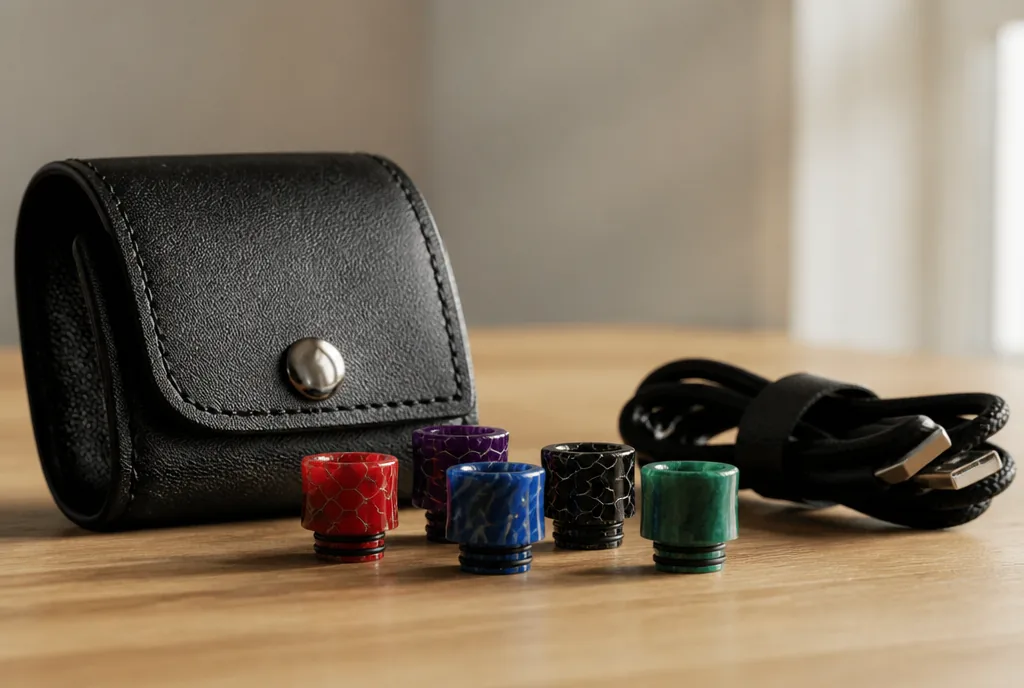
The only things that can legitimately go below are the items with neither a cell nor a liquid in them. An empty case, spare drip tips or blistered coils qualify. Anything else stays upstairs with you.
Loose cells attract the most attention
A bare cell rolling around a bag pocket is the exact scenario the rules exist to prevent, and it is also the most common reason a bag gets opened, because it shows up clearly on the scanner image.
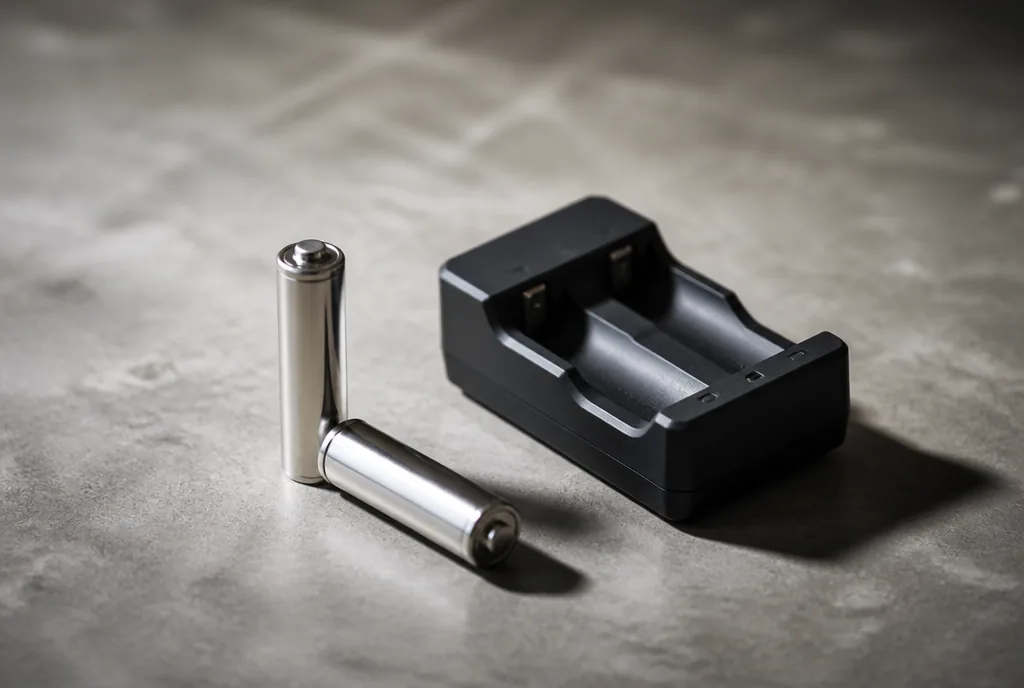
Cells such as 18650 or 21700 travel in a dedicated plastic case, one cell per slot. The purpose is not impact protection but keeping the terminals away from anything metallic.
A key, a coin or a second cell is enough to complete a circuit. The regulator accepts the original retail packaging, taped terminals or a separate pouch as alternatives, so there is no excuse for carrying one loose.
Counting matters as much as protecting. British Airways allows a maximum of four spare batteries per person, of which up to two may be power banks, and requires them kept in original packaging or insulated from metal contact. A twin cell mod plus two spare pairs sails past that without the owner noticing.
Power banks have their own conditions on top. They must be in the cabin, must not be recharged on board, and the Civil Aviation Authority sets a limit of two per person for the standard rating.
Stopping the device switching itself on
The international wording asks that the device be protected and that unintentional activation be prevented. That single sentence hides two entirely separate actions, and most travellers only perform one of them.
Locking is not switching off. A locked mod is still powered, because the lock disables the button rather than the circuit. Use the manufacturer’s shutdown sequence, which on most devices means five clicks.
On a mod with removable cells the cleanest answer is to take the cells out and put them in their case. What is left in the bag is an inert object with no circuit to close.
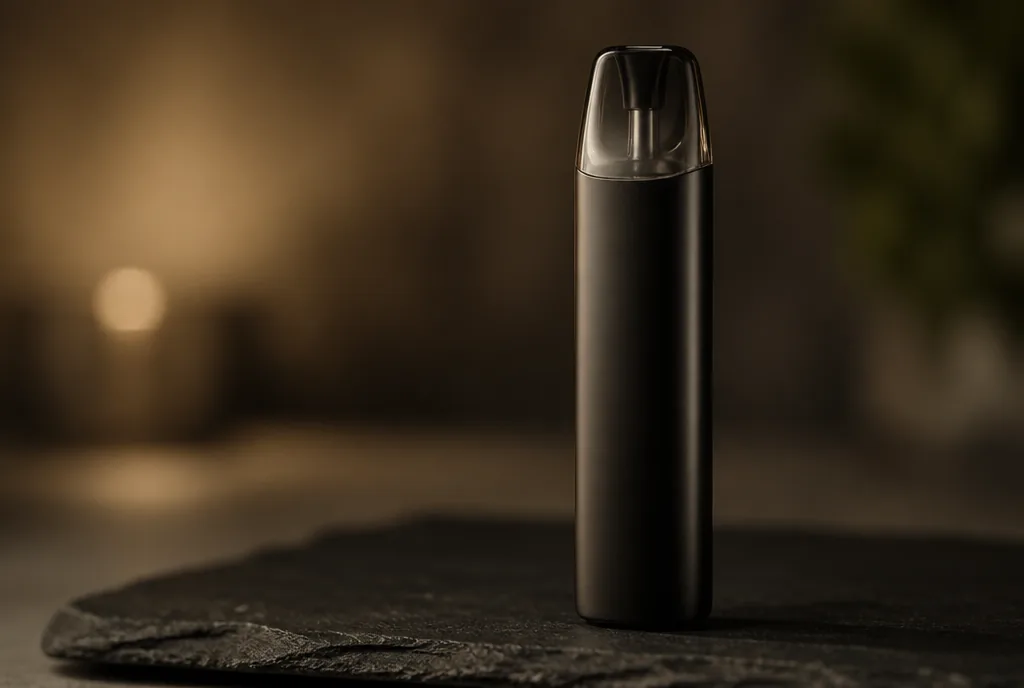
Auto draw pods need different handling because they fire on suction rather than a button. Compressed in a packed bag, one can run dry for several seconds on its own. Separating the pod from the battery section solves it, and where the design does not allow that, a rigid pouch at least stops the bag pressing on it.
One more requirement is easy to forget. The UK government’s hand luggage guidance asks that electronic devices be charged before travel, and warns that a device that will not switch on when requested will not be allowed on the aircraft.
A vape in hand luggage has to survive the pressure change
Cabin pressure sits below what your bottles were filled at on the ground. The trapped air in a part full bottle expands and pushes liquid towards any opening, which is why so many bags arrive damp.
Three habits deal with it. Fill bottles as high as they will go to shrink the air pocket, screw the cap down hard and then invert the bottle for a few seconds to check, and group everything inside a zip bag.
British bottles help here, since nicotine containing e-liquid is sold in 10 millilitre containers rather than large ones. More small bottles means more caps to check, so make the inversion test a routine rather than a spot check.
The tank deserves the same treatment. Full and lying flat, it weeps through the airflow slots; two thirds full and upright, it holds. What happens to those bottles once you land is covered in our guide on how to store e-liquid away from home.
Building a kit that survives a search
The goal is not maximum protection, it is an arrangement you can rebuild without thinking after every checkpoint. An over compartmented kit empties at the first search and never goes back together properly.
A rigid pouch the size of a glasses case holds a pod, a spare coil and a cloth. It shields the device from the compression of a packed bag, which is the single most common cause of breakage in transit.
Cells occupy their own case, stored beside that pouch rather than inside it. Mixing them into one compartment cancels the benefit of the case as soon as a knock shifts the contents.
Bottles stay apart from both. That separation is not only about screening, it stops a leak reaching your electronics, which no rigid case will undo.
Clearing UK security quickly
Screening officers are not judging your hardware, they are reading shapes and densities. Anything resembling a compact bundle of metal and cable earns a manual check.
Lifting the mod out and placing it in a tray, as you would a laptop, removes the doubt. Present your bottles the way that airport asks, which is worth checking in advance, because the government now states that liquid rules differ from one airport to another and asks passengers to check each one on their route.
Legible packing does the rest. One pouch for the device, one for the cells, one for the bottles, and the officer sees three identifiable objects instead of a heap.
A last precaution helps on connections. Keep the arrangement intact for the whole journey, because a second screening can happen in transit, and repacking a bag in an airport corridor is the surest way to leave a cell loose in a pocket.
A tidy bag also has nothing to say about where you are heading. A vape in hand luggage that satisfies every British rule can still be an offence the moment you clear customs, which is why the list of countries where vapes are banned belongs in the same ten minutes of preparation.
Frequently asked questions
Can more than one device be carried?
Nothing in the national rules stops you, provided each one is in the cabin and your total cell count stays within your airline’s limit. Some carriers do cap devices, so check before assuming.
Does the charger have to stay in the cabin too?
An empty charger holds no cell and could technically go below. Keeping it with the cells is simpler and saves explaining yourself.
Does a power bank count towards the spare battery allowance?
It depends on the airline. British Airways counts power banks within a four battery total, while the regulator sets a separate limit of two power banks per person, so read your carrier’s page rather than assuming.
Should the coil be taken out of the tank?
There is no need. A new coil still in its blister is worth keeping separate, though, because loose in a bag it usually ends up bent.
Does vaping kit count towards cabin bag dimensions?
Yes, it occupies the same volume as any other belongings and sits inside the allowance. One compact case therefore beats three scattered pouches.
Ten minutes the night before
Carrying a vape in hand luggage is more a question of method than of regulation. A device switched off, cells in cases, bottles filled and checked, everything grouped in pouches you can identify at a glance.
That routine takes ten minutes before departure and then holds for the entire trip, connections included. It makes the checkpoint predictable, which is the whole point when you are travelling with electronics, and it pairs with knowing what the rules actually say about taking a vape on a plane and where you are allowed to land with it.
Editorial content for adult readers only. Vaping products usually contain nicotine, a substance that causes addiction. Not for sale to under-18s in the United Kingdom. This article is not a buying recommendation.